Grease Extraction That Meets Fire Codes
Commercial Kitchen Exhaust Vent Hood Cleaning based in Comanche serving Central Texas restaurants, cafeterias, food trucks, and commercial cooking facilities requiring fire prevention and ventilation performance
Grease accumulates inside commercial kitchen exhaust systems every time cooking occurs, depositing combustible residue on hood interiors, exhaust fans, and grease collection areas. This buildup creates fire hazards that intensify with each service period, as grease layers thicken and approach ignition temperatures during high-volume cooking. Many commercial kitchen exhaust systems require professional cleaning every three months depending on kitchen usage, a compliance standard that reflects the rapid rate at which grease accumulates in facilities preparing fried foods, grilling meats, or operating charbroilers. H2 Air Duct Cleaning LLC provides commercial kitchen exhaust vent hood cleaning in Comanche and surrounding areas that removes grease deposits from the complete exhaust pathway, restoring fire safety and maintaining ventilation performance in restaurants, cafeterias, food trucks, and institutional cooking facilities.
The cleaning process addresses exhaust hoods that capture smoke and grease-laden air at cooking surfaces, ductwork that channels contaminated air from hoods to roof-mounted exhaust fans, the fans themselves where grease impairs blade efficiency, and grease collection cups or traps where liquid residue pools between cleanings. Professional extraction removes hardened grease that kitchen staff cannot reach during daily wipe-downs, targeting the hidden surfaces where fire risk concentrates.
Schedule recurring vent hood cleaning to maintain fire code compliance and operational ventilation performance.
Fire Prevention
Grease is highly flammable. Over time, grease vapors from cooking collect in the hood, ductwork, and exhaust fan.
If grease buildup is not removed.
• A small cooking flare-up can ignite the grease inside the hood system.
• Fires can spread rapidly through the duct system and into the building.
• Fire suppression systems may not work properly if grease blocks them.
According to NFPA 96 (National Fire Protection Association) guidelines, commercial kitchen exhaust systems must be regularly inspected and cleaned to prevent grease fires.
Health & Safety Compliance
Health and fire inspectors routinely check vent hood systems.
If the hood system is dirty, restaurants may face:
• Failed inspections
• Fines or violations
• Temporary shutdowns
Regular cleaning helps ensure compliance with:
• Local fire codes
• Health department regulations
• Insurance requirements
Improved Air Quality & Ventilation
A clean hood system removes smoke, grease vapors, heat, and odors effectively.
When grease builds up:
• Airflow becomes restricted.
• Kitchens become hotter and smokier.
• Staff comfort and productivity decrease.
Properly cleaned systems maintain strong airflow and ventilation.
Better Equipment Performance
Grease buildup can affect the exhaust fan and ventilation system.
Routine cleaning:
• Keeps fans running efficiently
• Prevents motor strain and breakdowns
• Extends the lifespan of the equipment
This helps reduce costly repairs and downtime.
Insurance Protection
Many insurance companies require proof of regular hood cleaning. If a fire occurs and the hood system was not properly maintained:
• Insurance claims may be denied
• Businesses may be liable for damages
Professional hood cleaning services typically provide before/after photos and service reports as documentation.
What Changes After Grease Removal
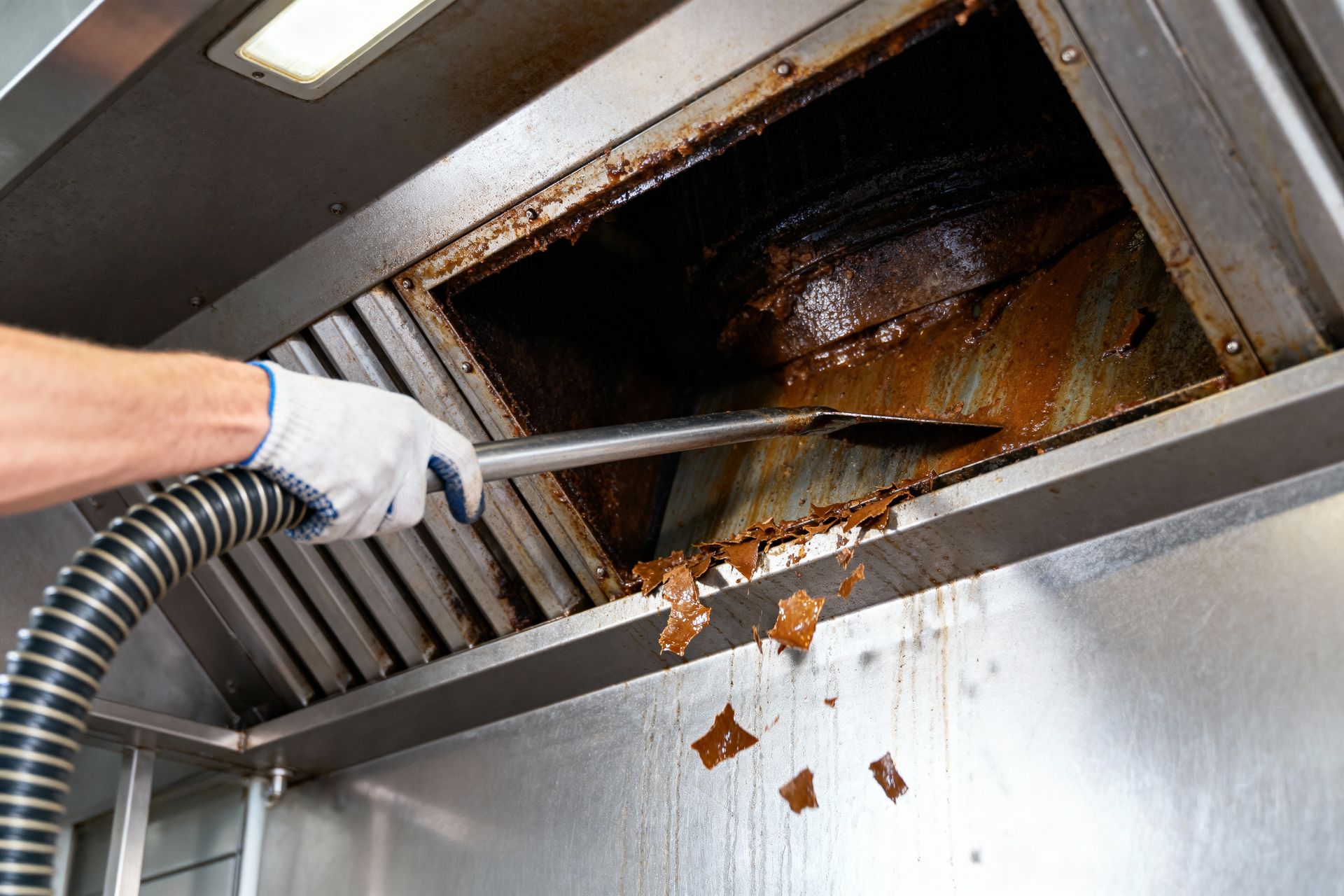
Grease-coated exhaust systems create two operational problems: they increase fire risk and reduce airflow efficiency. As grease layers thicken on vent hood interiors and fan blades, they narrow the air passage and add weight to moving components, forcing exhaust fans to work harder to pull smoke and heat away from cooking lines. This restriction causes smoke to linger over cooking surfaces, sets off ventilation alarms during normal cooking, and allows grease vapor to escape into dining areas instead of being captured by the hood system.
After H2 Air Duct Cleaning LLC completes exhaust cleaning, kitchen staff notice smoke clearing faster during peak cooking hours, exhaust fans operating more quietly without the vibration caused by grease-weighted blades, and fewer customer complaints about cooking odors drifting into dining spaces. The hood system captures grease-laden air effectively again, preventing the oily film that previously coated kitchen walls and equipment near cooking stations. Restaurants using high-heat cooking methods, such as wok stations or open-flame grills, benefit particularly because these operations generate grease vapor at rates that overwhelm inadequately maintained exhaust systems.
Recurring maintenance scheduling aligns cleaning frequency with kitchen volume, cooking methods, and compliance requirements. Facilities preparing fried foods or operating 24-hour kitchens typically require quarterly cleaning to meet fire safety standards, while lower-volume operations with lighter cooking methods may extend intervals to six months. The service does not repair damaged ductwork, replace worn exhaust fans, or upgrade undersized hood systems, but it removes the grease accumulation that creates most fire code violations and ventilation failures.
Questions Before Starting Your Project
Restaurant owners and facility managers preparing for exhaust system cleaning often want clarity on compliance timelines, service scope, and fire prevention specifics.
What determines how often commercial kitchen exhaust systems need cleaning?
Cooking volume, food preparation methods, and the type of cooking equipment used all affect grease accumulation rates, with facilities preparing fried foods or operating charbroilers typically requiring quarterly cleaning to maintain compliance.
How does grease buildup create fire hazards in Comanche and central Texas commercial kitchens?
Grease deposits inside exhaust ducts and on fan blades are highly flammable, and cooking heat can ignite accumulated grease if layers become thick enough to reach combustion temperatures during normal kitchen operation.
What does complete exhaust cleaning include?
Technicians clean hood interiors, access panels, ductwork from hood to exhaust fan, the fan housing and blades, and grease collection areas, removing both liquid grease and hardened deposits throughout the ventilation pathway.
Why does exhaust performance decline even with daily hood cleaning?
Kitchen staff clean visible hood surfaces, but grease vapor travels into ductwork and onto fan components where it hardens into deposits that daily cleaning cannot reach, requiring professional extraction to restore full airflow.
When should restaurants schedule exhaust cleaning to minimize disruption?
Most facilities schedule cleaning during closed hours or slow periods, allowing technicians to access hoods, ductwork, and rooftop fans without interfering with meal service or requiring kitchen shutdowns during peak revenue times.
H2 Air Duct Cleaning LLC works with restaurant owners and commercial kitchen operators throughout Abilene, Comanche and surrounding Central Texas towns to maintain compliant, fire-safe exhaust systems through scheduled maintenance programs. Call (325) 330-2055 to establish a recurring cleaning schedule that matches your kitchen's operational demands and keeps your facility in compliance with fire safety regulations.